Event report
Healthcare Panel - Role of the Private Sector in Intercepting the Decline of Aid in Healthcare
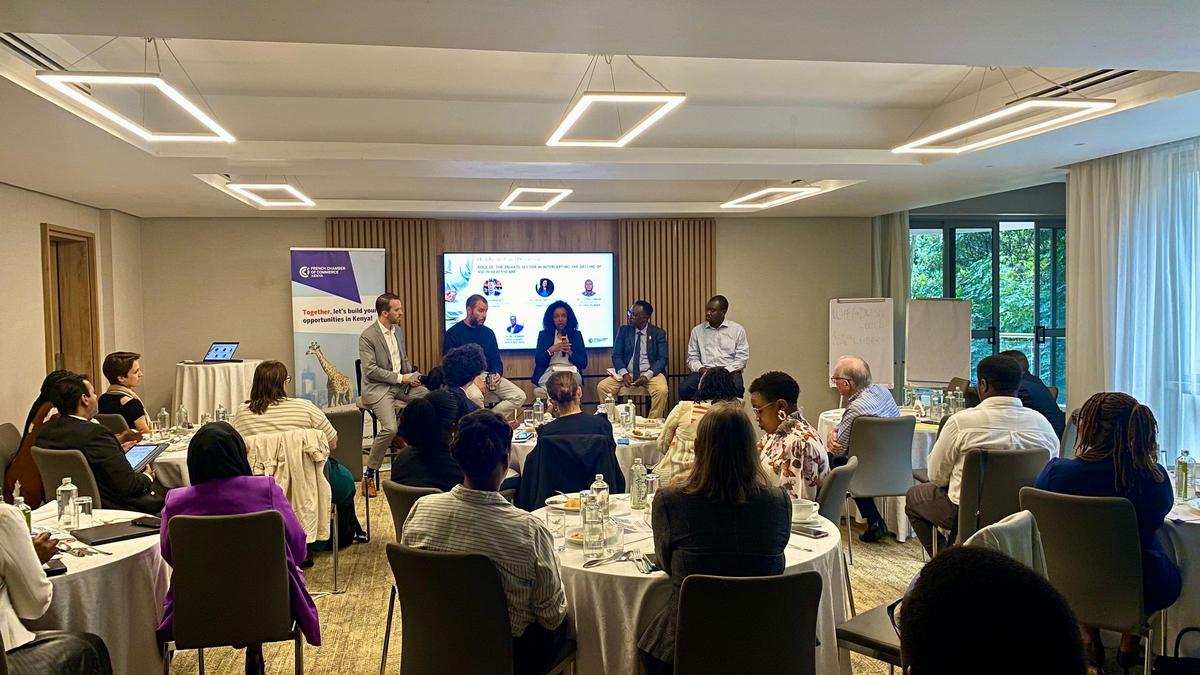
With global health aid declining, experts gathered in Nairobi to discuss how innovation and private sector engagement can sustain healthcare in Kenya.
On the morning of 5 March 2026, we were delighted to convene leaders from the public, humanitarian and private sectors at the Dusit Princess Hotel Residences for a timely conversation : how can Kenya sustain healthcare delivery as international aid declines ?
Moderated by William Herkewitz, Health, Science and Policy Journalist, the panel brought together four voices with complementary perspectives: Dr. Serawit Bruck-Landais (French Embassy), Dr. Cleophas Ondieki (LVCT Health), Caleb Chemirmir (Kenya Red Cross), and Jason Carmichael (Tibu Health).
The discussion opened with a clear reality : reduced donor funding is already being felt on the ground. Panelists described how the withdrawal of external support is affecting day-to-day service delivery, particularly in areas where Kenya has invested heavily over the past two decades. From declining technical support in health facilities, to reduced outreach coverage in remote counties, the panel highlighted early warning signs in prevention, community health, and disease surveillance. Several speakers underlined that the biggest risks may be those that remain invisible for now, especially for maternal and child health, adolescent girls, and infectious disease control.
At the same time, the panel stressed that this moment can also be a turning point. Speakers explored how the private sector can contribute through digital health models, teleconsultations, micro-insurance, and data-driven prevention, while recognizing the limits of what business can replace when it comes to national-scale public health priorities. A recurring message was that sustainability will depend on stronger governance, clearer policy direction, improved efficiency, and increased domestic resource mobilization, with collaboration across sectors becoming less optional and more essential.
The audience Q&A reinforced the urgency of reframing healthcare not as a cost, but as a long-term investment in Kenya’s economic and social stability, while also asking how innovation and AI can reach the last mile and support community-based prevention.
The French Chamber warmly thanks all speakers and participants for an open, practical and forward-looking exchange. This panel confirmed one shared conclusion : in a shifting funding landscape, the future of healthcare resilience in Kenya will be built through smarter coordination, stronger accountability, and deeper public–private collaboration.